


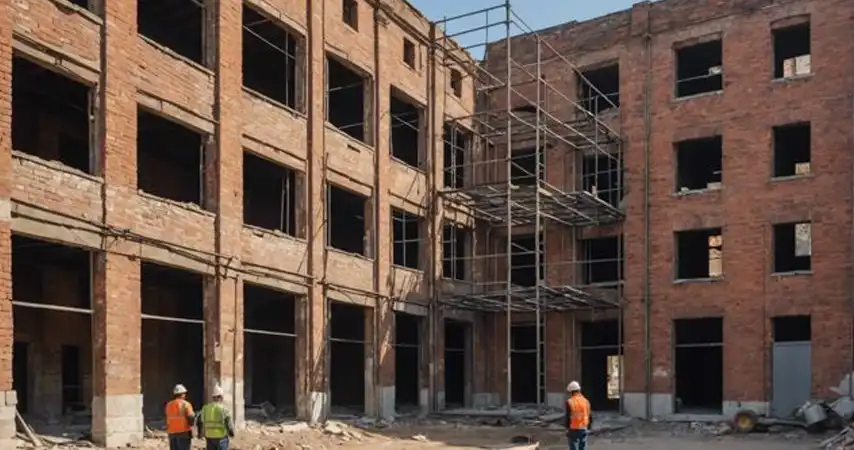
URM Building Retrofit Solutions involve key techniques like URM Parapet Bracing and Wall Anchorage to enhance safety and resilience in seismic areas. These measures, guided by codes like IEBC Chapter A1 and ASCE 41, are crucial for preventing structural failures during earthquakes.
Understanding URM Buildings and the Need for Retrofitting
Unreinforced Masonry (URM) buildings pose a significant risk in seismic-prone areas due to their inherent lack of flexibility. Retrofitting these structures can decrease the potential for loss of life and business disruption caused by seismic events.
Guidelines for retrofitting URM buildings are provided by the International Existing Building Code (IEBC) Chapter A1 and ASCE 41. Some key retrofitting areas include:
- URM Parapet Bracing – to prevent parapet failures during seismic activities.
- URM Wall Anchorage – to tie URM walls to horizontal diaphragms and resist out-of-plane loading.
- URM Out-of-Plane Wall Bracing – to add braces and prevent walls from buckling.
- URM Lateral Shear Resistance – to increase in-plane shear strength.
- URM Veneer Anchoring and Stitching – for aesthetic retrofit ties.
- Concrete Foundation reinforcement – to repair existing or design new foundation elements.
Qualified engineers should perform these retrofitting measures. These interventions vastly improve the safety and resilience of URM buildings in seismic regions. Commercial builders and residential homeowners should note retrofitting is not optional, but rather a step towards protection and compliance with structural safety standards.
Key Techniques for Retrofitting URM Buildings
Unreinforced Masonry (URM) buildings in regions prone to seismic activity present substantial risks due to their lack of structural flexibility. Appropriate retrofitting methods are essential to reduce potential hazards, prevent business disruption, and save lives.
Key retrofitting techniques are:
- URM Parapet Bracing: This process defends against parapet collapse in seismic events, ensuring the safety of building occupants and pedestrians.
- URM Wall Anchorage: Walls are tied to horizontal structures, such as roofs and floors, to combat out-of-plane loading forces.
When it comes to URM Out-of-Plane Wall Bracing, the incorporation of braces work to prevent walls from buckling under lateral forces during earthquakes. Techniques for enhancing URM Lateral Shear Resistance typically utilize materials like reinforced shotcrete or fiber-reinforced polymer (FRP). These solutions aim to increase the building’s in-plane shear strength without adding considerable weight.
URM Diaphragm Strengthening is another essential step. By enhancing the fortitude of wooden diaphragms, the building’s ability to withstand seismic loads is vastly improved. URM Veneer Anchoring and Stitching use stratagems such as the Simpson Strong-Tie Heli-Tie™ to provide cost-effective and visually appealing retrofit ties.
Finally, Concrete Foundation work includes the design and repair of foundational elements, which are essential for supporting new structural additions. Through the diligent application of these retrofitting measures by competent engineers, the safety and resilience of URM buildings in earthquake-prone areas can be significantly boosted.
Case Studies: Successful URM Retrofit Projects
Unreinforced masonry (URM) buildings in seismic areas carry great risks. Let’s look at how some successful retrofit projects managed these risks.
A project followed the International Existing Building Code (IEBC) Chapter A1 and ASCE 41. They worked on:
- URM Parapet Bracing: This prevented parapet failures during earthquakes.
- URM Wall Anchorage: They tied URM walls to roofs and floors.
- URM Out-of-Plane Wall Bracing: Bracing was added to stop walls from buckling.
- URM Lateral Shear Resistance: The method used here increased in-plane shear strength, without adding weight.
- URM Diaphragm Strengthening: This process improved the strength of wood diaphragms to withstand earthquakes.
Skilled engineers completed these changes, enhancing the safety of URM buildings.
Another project involved URM Veneer Anchoring, Stitching, and Concrete Foundation repair and design. Veneer anchoring and stitching improved the structure’s aesthetic appeal and cost-effectiveness. Whether by designing new foundation elements or fixing old ones, this project enhanced structural integrity.
These examples show us how retrofitting can effectively tackle seismic challenges in different regions. Far from theoretical, they provide a practical view of the retrofit process.
Navigating Regulations and Funding for URM Retrofitting
Retrofitting Unreinforced Masonry (URM) buildings is an important step in promoting safety and resilience, particularly in seismic regions. The International Existing Building Code (IEBC) Chapter A1 and ASCE 41 provide guidelines for the seismic retrofit of such buildings.
Key areas of concentration include:
- URM Parapet Bracing: Convenient for preventing failures during seismic occurrences, thereby enhancing the protection of occupants and pedestrians.
- URM Wall Anchorage: This involves tying URM walls to horizontal diaphragms to provide resistance against out-of-plane loading.
- URM Out-of-Plane Wall Bracing: Addition of bracing can avert walls from buckling out of plane during lateral loading.
- URM Lateral Shear Resistance: Methodologies such as reinforced shotcrete or fiber reinforced polymer (FRP) can boost in-plane shear strength without notable weight addition.
- URM Diaphragm Strengthening: This enhances the strength of wood diaphragms to bear seismic loads.
- URM Veneer Anchoring and Stitching: Cost-effective and aesthetically pleasing retrofit ties.
- Concrete Foundation: This involves the design of new foundation elements or repair of existing ones to support new structural elements.
Effective implementation of retrofitting solutions requires skilled engineers. Foundation Builders offers comprehensive services in this regard, greatly enhancing the safety and resilience of buildings.
Part of these procedures involve necessary permits and inspections based on regulations governing retrofitting URM buildings. Also, funding options are available for building owners to support retrofitting projects. These could include grants and loans, thereby easing the financial burden of these essential safety measures. Remember, the goal is to mitigate potential loss of life and disruption of business operations due to seismic events. Get in touch with Foundation Builders today for your free inspection.